 | 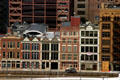 | 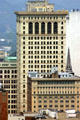 | 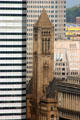 |
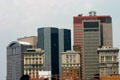
| Heritage buildings Benedum-Trees (1905) (19 floors) by Thomas H. Scott, Investment (1927) (21 floors) by John Donn, & Arrott (1902) (18 floors) by Frederick J. Osterling in front of skyscrapers. Pittsburgh, PA. | Heritage row of offices like Firstside Building & Riverview Place facing Monongahela River. Pittsburgh, PA. | Oliver Building (1910) (535 Smithfield St.) (25 floors) behind Park Building (1896) (15 floors) by George B. Post. Pittsburgh, PA. Architect: D.H. Burnham & Company. | Allegheny County Courthouse tower (250ft) (1888) (436 Grant St.) (5 floors). Pittsburgh, PA. Architect: Henry Hobson Richardson. On National Register. |
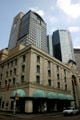 | 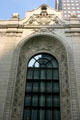 | 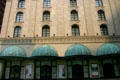 | 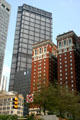 |
| Heinz Hall for the Performing Arts (1927 & 71) (former Loew's Penn Theater) with Dominion & PNC Plaza towers. Pittsburgh, PA. | Relief tiles around window of Heinz Hall for the Performing Arts. Pittsburgh, PA. | Facade of Heinz Hall for the Performing Arts. Pittsburgh, PA. | Omni William Penn Hotel (1916) (530 William Penn Place) (18 floors) with U.S. Steel Tower behind. Pittsburgh, PA. Architect: Janssen & Abbott. On National Register. |
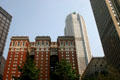 | 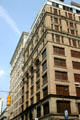 | 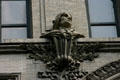 | 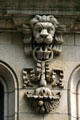 |
| One Mellon Center (1983) (500 Grant St.) (54 floors) over Omni William Penn Hotel. Pittsburgh, PA. Architect: Welton Becket & Assoc.. | Kaufmann's Building (1898) (Fifth Ave.) (12 floors). Pittsburgh, PA. Architect: Charles Bickel. | Indian carving on Kaufmann's Building. Pittsburgh, PA. | Lion carving on Kaufmann's Building. Pittsburgh, PA. |
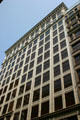 | 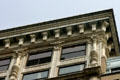 | 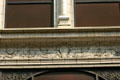 | 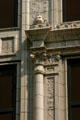 |
| Kaufmann's Department Store (1913) (400 Fifth Ave.) (13 floors). Pittsburgh, PA. Architect: Janssen & Abbott. | Tile details of cornice on Kaufmann's Department Store. Pittsburgh, PA. | Tile details showing K & dolphins on Kaufmann's Department Store. Pittsburgh, PA. | Tile columns on Kaufmann's Department Store. Pittsburgh, PA. |
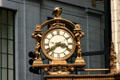 |  |  |  |
| Kaufmann's Department Store Clock. Pittsburgh, PA. | Portal detail of Heinz 57 Center. Pittsburgh, PA. | Heinz 57 Center (1914) (339 Sixth Ave.) (13 floors). Pittsburgh, PA. Architect: Starrett & Van Vleck. | Spire of Smithfield United Church (1925-6). Pittsburgh, PA. Architect: Henry Hornbostel. |
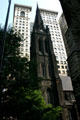 | 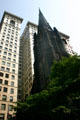 | 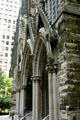 | 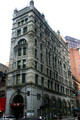 |
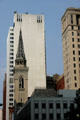
| Trinity Episcopal Cathedral (1872) spire 61m 200ft (315 Shady Ave.). Pittsburgh, PA. Style: Gothic. Architect: Gordon Lloyd. | Oliver Building (1910) (535 Smithfield St.) (25 floors) behind Trinity Episcopal Cathedral spire. Pittsburgh, PA. Architect: D.H. Burnham & Company. | First Presbyterian Church (1903-5) (312 6th Ave.). Pittsburgh, PA. Architect: Theophilus P. Chandler. | Narrow granite building on Sixth Avenue. Pittsburgh, PA. |
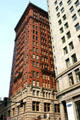 | 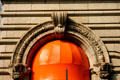 | 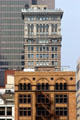 | 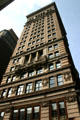 |
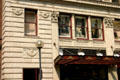
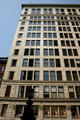
| The Bank Center (307 Fourth Ave.) (16 floors). Pittsburgh, PA. Architect: Alden & Harlow. | Window archway & awning of The Bank Center. Pittsburgh, PA. | Arrott Building with crenellated roofline. Pittsburgh, PA. | Arrott Building (1902) (401 Wood St.) (18 floors) with crenellated roofline. Pittsburgh, PA. Architect: Frederick J. Osterling. |
 |  |
|
|
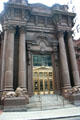
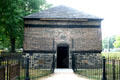
| Dollar Savings Bank Building (1870). Pittsburgh, PA. Style: Beaux Arts. Architect: Isaac H. Hobbs& Sons. | Block House of Fort Pitt (1764) by British Colonel Henry Bouquet guards the tip of Pittsburgh. Pittsburgh, PA. |
|
|